Cape Coral Pools Wear Out Their Finishes Early
Every cement-based pool finish has a lifespan, and Southwest Florida shortens it. Year-round swimming means year-round chemical exposure. Intense UV works on everything above the waterline. Summer storm season swings chemistry back and forth, and hard fill water pushes calcium into and out of the surface. A marcite finish that might cruise past 15 years in a northern pool often starts feeling like sandpaper here around year 8 to 12.
The signs are easy to spot from the lanai. Rough patches that scuff feet on the steps and shallow end. Gray or brown stains that no amount of brushing lifts. Chalky clouding when you rub the wall. Dark spots where the finish has thinned enough to show gunite. A pool that suddenly drinks acid and chlorine without holding balance. Any of these means the surface is at the end of its road, and waiting rarely makes the project cheaper.
We resurface pools across the Cape, from the original canal-front homes around Pelican and the Rose Garden to newer construction out along the Burnt Store corridor, plus Matlacha, Pine Island, and greater Fort Myers. Some of these pools date to the city's earliest building booms; a proper resurface gives them another few decades of service.
Three Finish Families, One Honest Conversation
Each finish trades cost against lifespan and looks. We will tell you which one actually fits your pool, your water, and your plans for the house.
White Plaster / Marcite
The classic bright-blue Florida look and the budget-friendly choice. Smooth underfoot and easy to renew down the road.
- Lowest upfront cost
- Typically 8-12 years in SW Florida
- Most sensitive to chemistry swings
Quartz Blends
Plaster reinforced with quartz aggregate. Harder, more stain-resistant, and available in colors that give the water real character.
- Strong value for the money
- Typically 10-15 years here
- Handles hard city water well
Pebble Finishes
Exposed aggregate with a natural, lagoon-style look. The most durable surface you can put in a residential pool.
- Longest lifespan, 15-20+ years
- Best stain and wear resistance
- Premium cost, premium result
Waterline tile, step trim, and mosaic accents can be added to any finish while the pool is empty. It is the cheapest time you will ever have to do that work.
How a Resurface Goes, Step by Step
Assessment and quote
A local pool company should inspect the surface, tile line, and any cracks or hollow spots. Ask for finish options quoted in writing, and ask whether the surface still has honest life left.
Drain, with respect for the water table
Cape Coral sits on a high water table, especially in the wet season, and an empty shell can shift if groundwater pressure is ignored. We check conditions, use the hydrostatic relief valve, and schedule drain windows accordingly. This is a big reason the dry season, November through May, is prime resurfacing time here.
Prep, repairs, and tile
The old finish is chipped out or prepped for bond, cracks and delaminated areas are repaired, and new waterline tile goes in if you have chosen it. Crews protect your screen enclosure, deck, and landscaping throughout; a lanai is a tight workspace and we treat it that way.
Finish application and refill
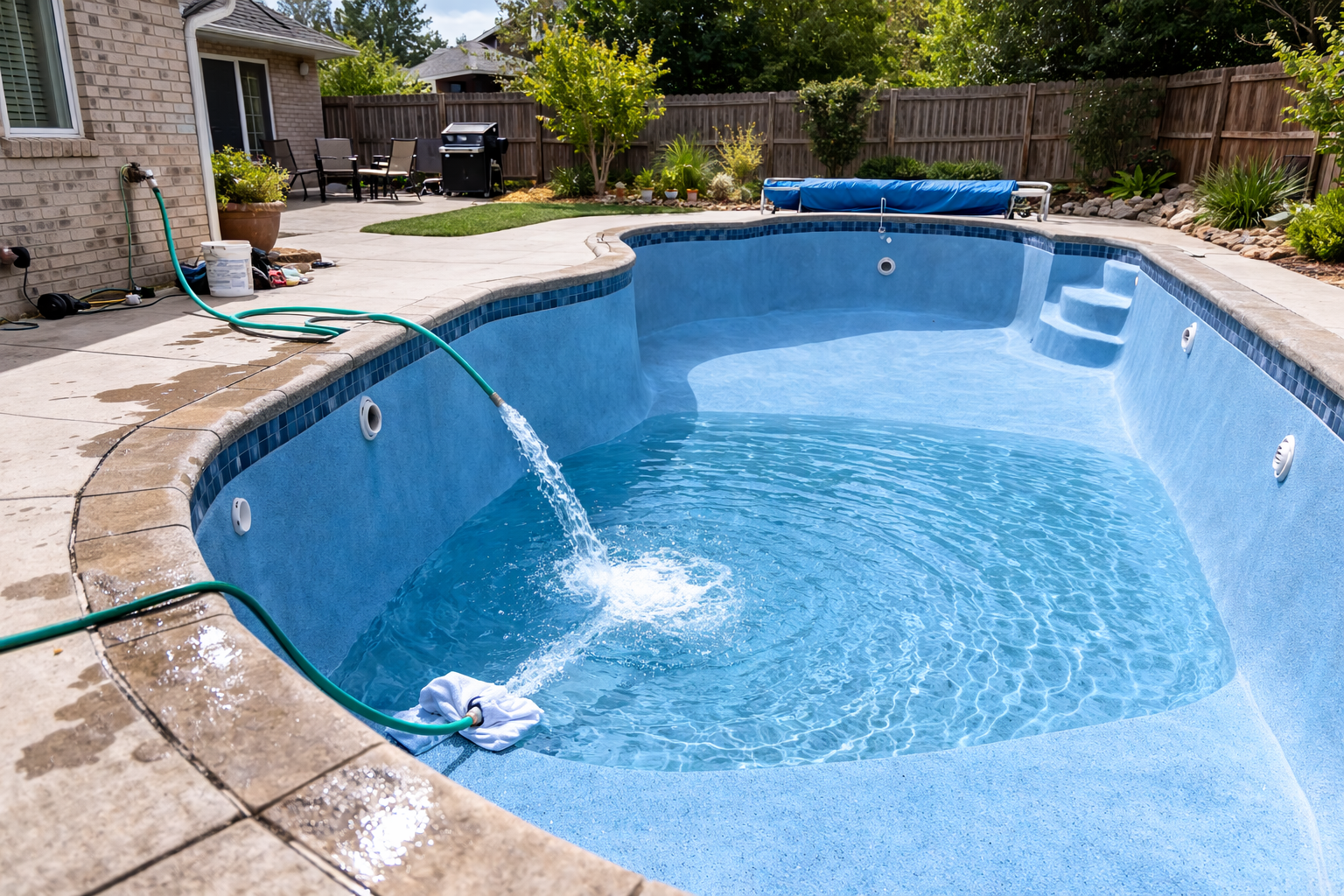
The new finish is applied in one continuous operation for an even, consistent surface, then the pool refills without stopping to avoid rings. For well-fed homes we test fill water for iron first, since metals can stain a fresh finish on day one.
Startup and cure care
The first month decides how the finish looks for the next decade. We manage the startup: frequent brushing, staged chemistry, and holding salt systems off until the surface has cured, commonly around 28 days. Then it hands off cleanly to regular maintenance.
What Pool Resurfacing Costs in Cape Coral
Resurfacing in Cape Coral typically runs $4,500 to $12,000 and up, with finish choice doing most of the deciding. As a general shape:
- White plaster anchors the low end of the range for a typical residential pool.
- Quartz blends land in the middle, and are where most Cape Coral homeowners end up.
- Pebble finishes fill the top of the range and beyond, especially on large or freeform pools.
- Add-ons like waterline tile, step repairs, spa surfaces, and structural crack work move any project up from its base.
Pool size, depth, and current surface condition all matter, so the only number worth planning around is a written quote from someone who has stood at your pool. Requesting one is free.
Resurfacing Questions, Answered
How much does pool resurfacing cost in Cape Coral?
Pool resurfacing in Cape Coral typically runs $4,500 to $12,000 and up, driven mostly by finish choice and pool size. White plaster sits at the lower end, quartz blends in the middle, and pebble finishes at the top. Waterline tile, step repairs, and structural fixes add to the number. Every project starts with a free on-site quote.
How long does pool resurfacing take?
The on-site work usually spans several days to about a week: drain, chip-out, prep, tile, finish application, and refill. Then comes the startup period, roughly a month of frequent brushing and careful chemistry while the new finish cures. Ask who handles the startup visits so the finish gets the care its warranty expects.
How long will a new finish last in Southwest Florida?
As a rule of thumb in our climate: white plaster typically gives 8 to 12 years, quartz blends around 10 to 15, and pebble finishes 15 to 20 or more. Consistent water chemistry is the biggest factor. A finish maintained on a weekly service plan reliably outlasts one that rides chemical swings.
Can you resurface a pool during the rainy season?
Yes, but scheduling gets more careful. Cape Coral's high water table and daily summer downpours affect when a pool can be safely drained and how finish application days are planned. The dry season, roughly November through May, offers the smoothest window. We check groundwater conditions and use hydrostatic relief so the shell stays put either way.
What is startup care and why does it matter?
A fresh cement-based finish cures underwater for about a month, releasing plaster dust and pushing pH up. Startup care means frequent brushing, gradual chemical adjustments, and holding off on salt system operation until the finish has hardened, commonly around 28 days. Done right, the finish stays smooth and evenly colored for its full lifespan.
Should I refill my resurfaced pool with well water?
Be careful with well fills. Well water in parts of the north Cape and on Pine Island often carries iron that can stain a brand-new finish. For well-fed properties we test the water first and use metal sequestrants during the fill, or help you arrange an alternate fill source when the metal load is high.
More Ways We Can Help
A new finish deserves good care. Here is how we keep it looking new.
Rough Steps? Stains That Will Not Brush Out?
Get a free on-site assessment and a quote for plaster, quartz, or pebble. If your surface has life left in it, we will tell you that too.